Introducing VeilBrowser
A local-first antidetect browser platform for teams that run many browser identities at scale.

Today we're introducing VeilBrowser, an enterprise antidetect browser platform built for teams that operate many browser identities at scale.
Why we built it
Existing tools treat fingerprinting as a patch on top of a normal browser. That approach drifts: signals change between launches and get correlated across sessions, and a patched function is detectable as a patched function.
VeilBrowser takes the other route. A profile is a curated browser build, so canvas, WebGL, audio, fonts and device metrics are properties of the binary rather than scripts running inside it. You pick a build by describing the device you want (operating system, browser version, GPU class) and every launch of that profile presents the same machine. See fingerprints for the full set of signals it covers.
The network half is aligned for you. Attach a proxy to a profile and its timezone, locale, languages and geolocation are derived from that proxy's exit IP at launch, while WebRTC candidates stay on the proxy route instead of leaking the host's real address. Details in network and leak prevention.
Local-first by design
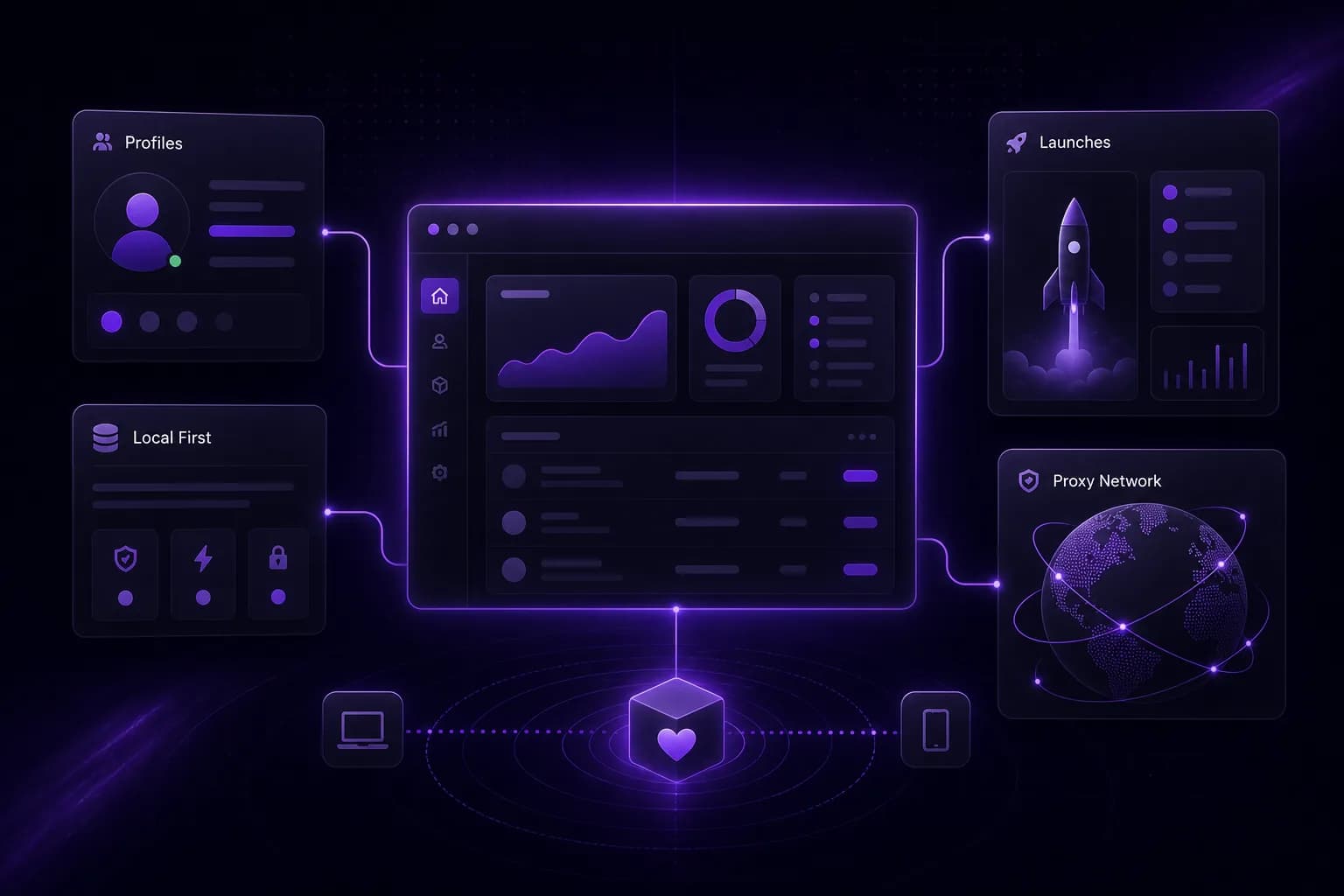
With the Local API, browsers run on your own machines. VeilBrowser manages profiles, teams and orchestration, while your actual sessions stay on your infrastructure. That matters for privacy, compliance and performance. Enterprises can go further and self-host the control plane and worker fleet too.
Automation-native
Every launched profile exposes a CDP endpoint, so you can drive it with Puppeteer, Playwright or Selenium, or orchestrate a whole fleet through the REST API. A single WebSocket endpoint launches and load-balances browsers across the fleet with no REST pre-step.
Get started
Create your first profile in minutes and scale to thousands when you're ready. Get started or read the docs.