Web scraping at scale with antidetect browsers
A practical architecture for reliable, large-scale data collection — real fingerprints, per-profile proxies, and automation that behaves like a person.

TL;DR
Reliable scraping at scale is less about speed and more about looking like real users: consistent fingerprints, per-profile residential proxies, human-like pacing, and clean session isolation. An antidetect browser gives you all four.
Most scraping breaks not because of clever selectors but because the target flags the client as automated. The fix is to make each worker look like a distinct, believable user — and to keep it that way.
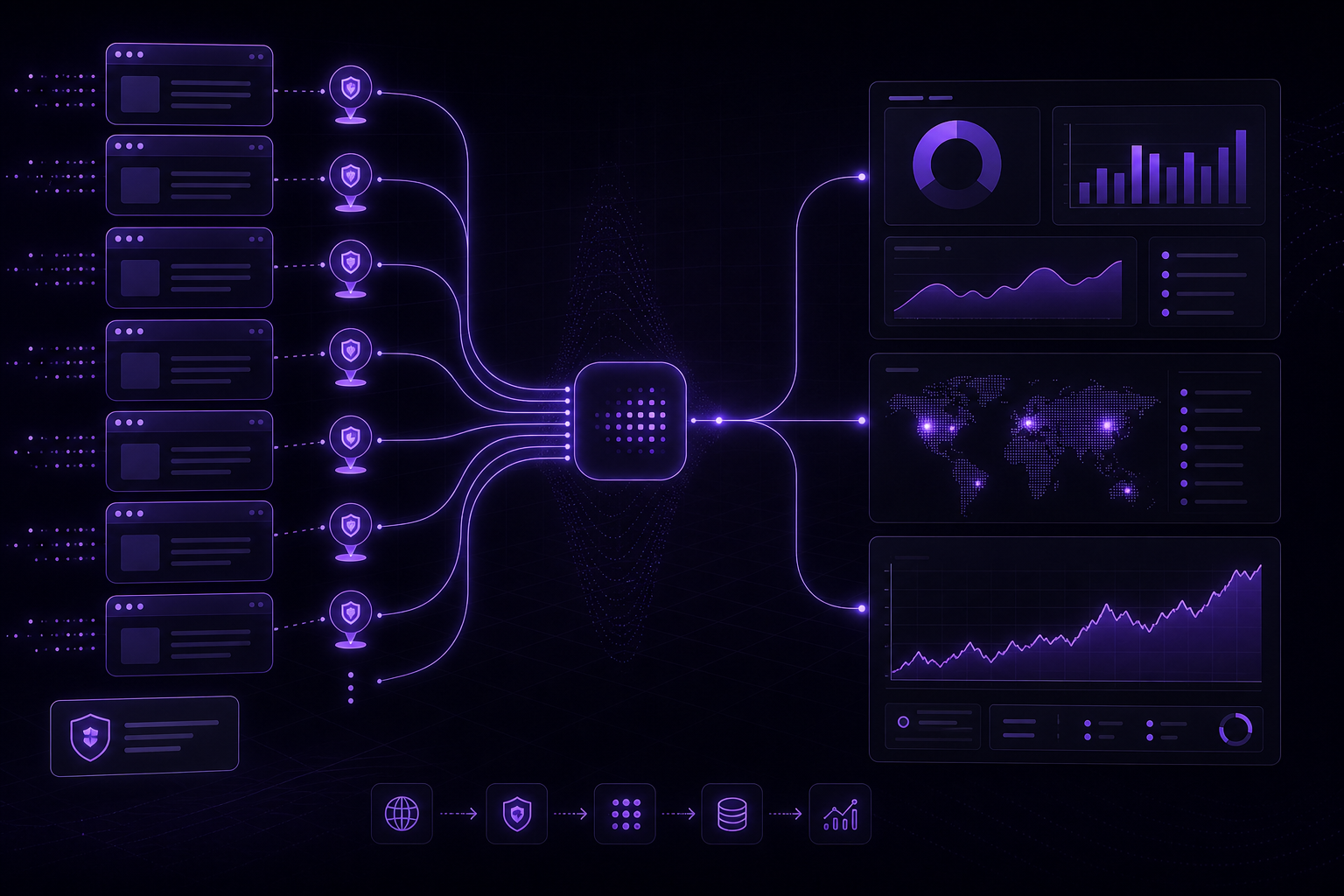
The four pillars
Consistent fingerprints
Each worker uses a profile with a stable, platform-consistent fingerprint. No per-request randomization, no headless tells (software GPU, missing fonts). See what fingerprinting reads.
Per-profile proxies
One proxy per profile, region-matched, with WebRTC and DNS aligned. Rotating IPs under a single identity is a classic tell.
Human-like behavior
Randomized pacing, realistic navigation, and back-off on rate limits. Scrape like a person browsing, not a script hammering endpoints.
Session isolation
Cookies and storage are per profile, so one blocked identity never contaminates the rest.
A simple worker loop
import puppeteer from "puppeteer-core";

for (const job of jobs) {
  const { wsEndpoint } = await veil.launch(job.profileId);
  const browser = await puppeteer.connect({ browserWSEndpoint: wsEndpoint });
  try {
    const page = await browser.newPage();
    await page.goto(job.url, { waitUntil: "networkidle2" });
    await collect(page);
  } finally {
    await browser.disconnect();
    await veil.stop(job.profileId);
  }
}
Launch, do one unit of work, stop. Keep sessions short and idempotent so retries are safe. See the automation guide.
Scaling out
To go from one machine to a fleet, run the Local API on several hosts and orchestrate them through the REST API. Enterprises can self-host the whole stack for data residency and higher concurrency.
What to avoid
- Sharing one fingerprint across many proxies (or one proxy across many identities).
- Datacenter IPs for identities that should look residential.
- Aggressive concurrency that ignores rate limits.
- Headless defaults that leak automation signals.
FAQ
Try it
Build a resilient collection fleet on consistent identities. Start free or read the self-hosting guide.